
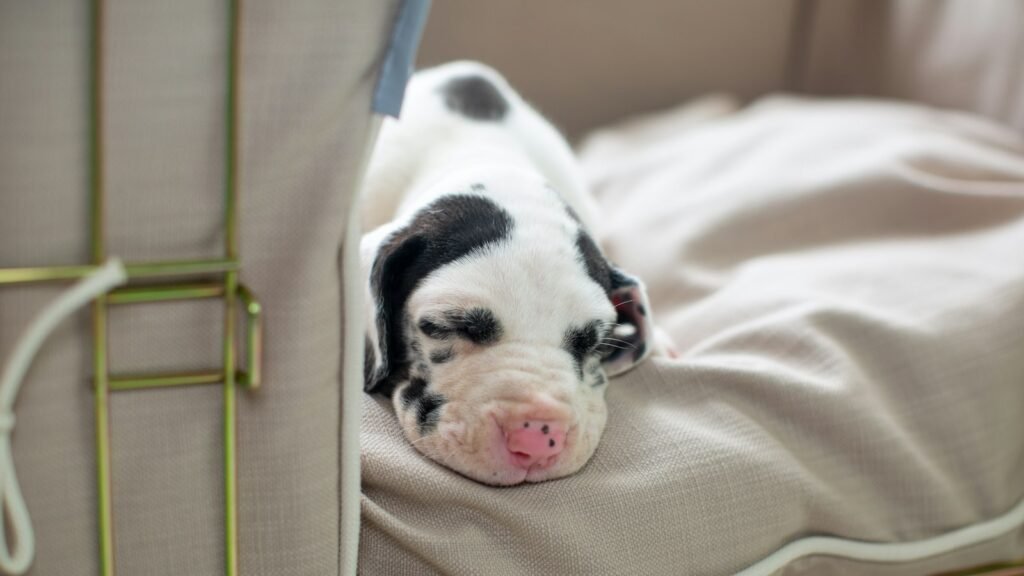
In your puppy’s first week, keep life small and predictable: potty breaks every hour or two and after every nap, meal and play session, three or four small meals, lots of enforced naps, short positive training, and a vet visit within the first few days. Skip the welcome party. A calm start makes house-training, crate training and sleep far easier.
Here’s what to set up before pickup day, and a day-by-day outline of the week.
Before your puppy comes home
Puppy-proof
- Lift cords, shoes, cleaning products, medications and toxic houseplants out of reach.
- Gate off rooms you don’t want explored yet.
- Pick a quiet spot for the crate or pen, ideally near where you sleep.
Shop once
- The same food the breeder or shelter used, to avoid an upset stomach
- Bowls, a crate or playpen, and a washable bed
- Collar, ID tag and leash
- Three or four safe chew toys
- Enzyme cleaner for accidents
Day 1: Arrival
Carry your puppy straight to the spot outside where you want them to go potty, wait quietly, and praise any success. Inside, let them explore one room. Introduce family members a couple at a time and ask friends to wait a week before visiting. Show your puppy their water, their bed and their crate, with a treat tossed inside.
Expect some crying the first night. A crate next to your bed lets you reassure your puppy and hear when they need a bathroom trip.
Days 2–3: Set the rhythm
Puppies feel safe when the day repeats. Build it around four things:
- Potty breaks: on waking, after eating, after play, and every hour or two in between. Same spot, calm praise. Our puppy potty training schedule lays this out by age.
- Meals: three or four small meals at the same times each day.
- Naps: young puppies sleep most of the day. An overtired puppy gets bitey and wild, so put them down for a nap after about an hour awake.
- Play: short sessions with toys, not hands.
Our realistic new puppy schedule shows how this fits into a real day.
Days 3–5: Book the vet and start gentle training
Schedule a checkup in the first few days. Your vet will examine your puppy, plan vaccines and deworming, discuss parasite prevention, and tell you when it’s safe to meet other dogs and walk in public places. Bring any records from the breeder or shelter.
Training this week is about habits, not commands:
- Name game: say their name, reward the moment they look at you.
- Crate is good: treats and meals in the crate, door open at first. See our crate training guide.
- Handling: touch paws, ears and mouth briefly, then treat, so vet visits and nail trims are easier later.
- Short alone time: a few minutes in the pen while you’re in the next room.
Days 5–7: Start socializing safely
The weeks before about 16 weeks of age are when puppies most easily learn that new things are safe. Even before vaccines are complete, you can carry your puppy to watch traffic, invite a calm vaccinated adult dog over, and introduce new surfaces and sounds at home. Our puppy socialization checklist has 100 ideas, and the free Puppy Timeline maps vaccines and milestones by date.
First-week mistakes
- Too much, too soon. A stream of visitors overwhelms a new puppy.
- Skipping naps. Most “crazy puppy” behavior is exhaustion.
- Punishing accidents. Clean up with enzyme cleaner and take your puppy out more often.
- Switching food straight away. If you want to change, do it gradually over a week.
When to call your vet
Call promptly if your puppy has vomiting or diarrhea that lasts more than a few hours or contains blood, stops eating, seems unusually sleepy or weak, coughs, or has discharge from the eyes or nose. Young puppies can go downhill fast, and parvovirus is a real risk before vaccines are complete.
Frequently asked questions
Where should my puppy sleep the first night? In a crate or pen beside your bed, so they aren’t alone in a strange place and you can hear when they need to go out.
How often should I take my puppy out? After every nap, meal and play session, and every hour or two in between while they’re awake.
When can my puppy go for walks? Ask your vet. Timing depends on your puppy’s vaccine schedule and local disease risk.
Why is my puppy biting so much? Teething, play and overtiredness. Our guide on how to stop puppy biting has a 7-day plan.
Sources: AKC, “Puppy Training Timeline”; ASPCA, “General Dog Care”. General information, not a substitute for advice from your vet.
Want this as a plan built for your puppy?
Answer 10 quick questions and get a 30-day, force-free training plan that tackles your top 3 struggles first, with a checklist for every week.