
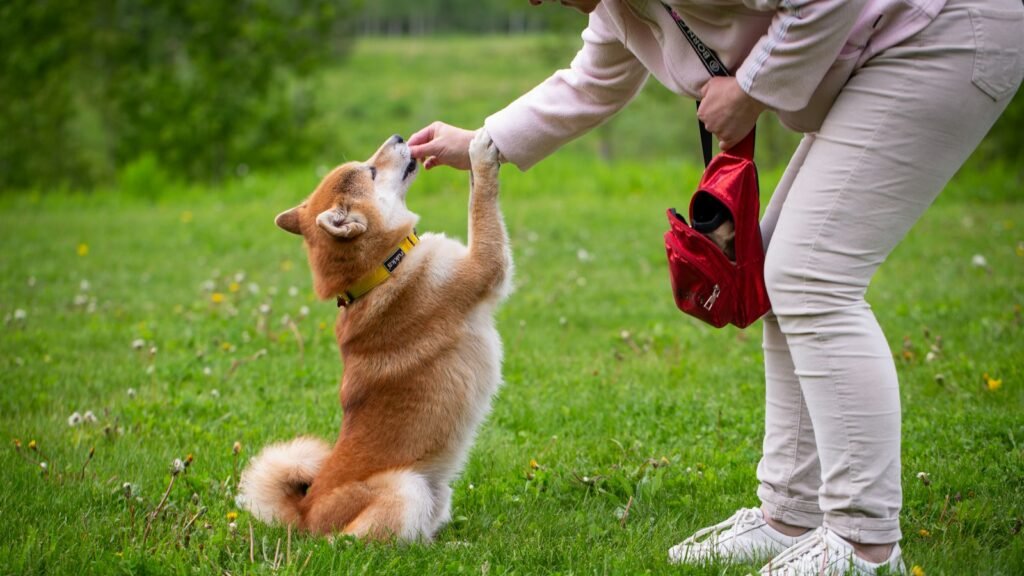
To train your dog, start with attention (their name and eye contact), then teach sit, come, down and stay in short daily sessions of five to ten minutes, rewarding the right behavior the instant it happens. Use the same word and hand signal every time, make sure the whole household does too, and skip punishment. Reward-based training is the approach veterinary behavior organizations recommend, and it works for puppies and adult dogs alike.
You don’t need to be a professional. You need a pocket of treats, a plan, and a few minutes a day.
The four rules that make training work
- Short sessions. Several five-minute sessions beat one 30-minute slog. Stop while your dog is still keen.
- Instant rewards. Your dog connects the treat to whatever they were doing in the second before it arrived. Late rewards teach the wrong thing.
- One word, one meaning. If “down” means lie down, don’t also use it for “get off the couch.”
- Ignore mistakes, don’t punish them. Reset and try again, making it a little easier.
Step 1: Name and “watch me”
Say your dog’s name in a cheerful voice. The moment they look at you, say “yes” and treat. Repeat a handful of times, several times a day. Once that’s reliable, add “watch me” for a second or two of eye contact. Every other cue depends on having your dog’s attention first.
Step 2: The core four
Sit
Hold a treat at your dog’s nose and move it slowly up and back over their head. As the nose rises, the rear goes down. The moment it touches the floor, “yes” and treat. Add the word “sit” once your dog is doing it reliably.
Come
Start indoors, a few steps away. Say your dog’s name and “come” in a happy voice, back away, and throw a small party when they reach you. Never call your dog to you for something unpleasant, like a bath. A reliable recall can save a life, so it’s worth practicing every day.
Down
From a sit, lower a treat from your dog’s nose straight to the floor between their paws, then slowly out along the ground. When elbows touch down, “yes” and treat.
Stay
Ask for a sit, wait one second, reward. Then two seconds. Then take one step back and return to reward. Build time and distance separately, never both at once.
Step 3: Leash manners
When the leash goes tight, stop. When it loosens, walk on and reward your dog for being by your side. Practice somewhere quiet before tackling busy streets. Our loose-leash walking guide walks through the method.
Step 4: Everyday problems
- Jumping up: turn away until all four paws are on the floor, then greet and reward.
- Barking for attention: wait for a pause, then reward the quiet. See how to stop excessive barking.
- Puppy biting: stop play when teeth touch skin and redirect to a toy. Our 7-day puppy biting plan has the details.
The pattern is the same each time: make the unwanted behavior pointless, and make the behavior you want pay.
How long it takes
Many dogs learn a basic sit in a few sessions. Reliable behavior around distractions, like a recall at the park, takes weeks to months. Older dogs learn too; they may just need to unlearn an old habit first. Daily practice matters far more than long sessions.
When to get help
Call a certified positive-reinforcement trainer if progress stalls or you’re not sure what’s going wrong. See your vet first if your dog suddenly stops responding, seems sore when asked to sit or lie down, or shows new fear or aggression, since pain and hearing loss can look like “not listening.”
Frequently asked questions
What should I teach my dog first? Their name and eye contact, then sit, come, down and stay.
Can you train an older dog? Yes. Adult dogs learn new cues well with the same reward-based methods.
Do I have to use treats forever? No. Once a behavior is solid, reward it some of the time, and mix in praise, play and life rewards like opening the door for a walk.
Not sure where to start with a specific problem? The free Dog Behavior Plan Generator builds a step-by-step plan around your dog.
Sources: ASPCA, “General Dog Care”; AKC, “Puppy Training Timeline”. General information, not a substitute for help from your vet or a qualified trainer.
Training FAQ
How long should dog training sessions be?
Keep training sessions short — 5 to 10 minutes for puppies, up to 15 minutes for adult dogs. Several short sessions per day work better than one long session, and always end on a positive note.
What is the first thing to teach a puppy?
Start with your puppy’s name so they learn to give you their attention. Then teach sit, come, and stay one at a time, using treats and praise to reward every correct response.
How do I stop my dog from pulling on the leash?
Stop moving when the leash goes tight and only walk forward when it slackens, rewarding your dog for staying close. Consistent practice plus the right equipment makes loose-leash walking much easier.
What should I do if my dog barks excessively?
Avoid shouting, which sounds like barking back to your dog. Instead, identify the trigger, redirect their attention, and reward quiet behavior calmly and consistently.