
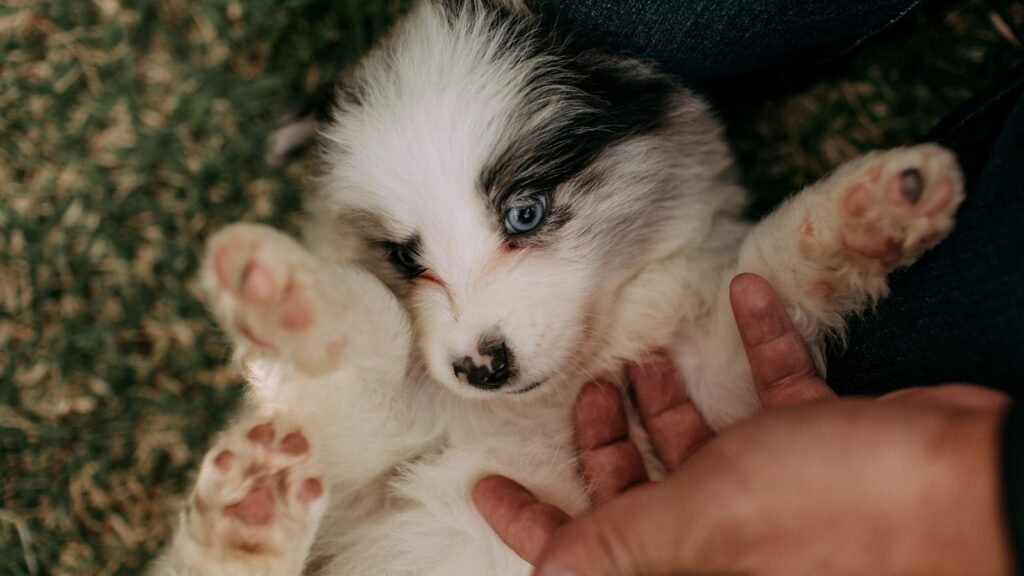
Puppy biting is completely normal — but that doesn’t make those needle-sharp teeth hurt any less. The good news: biting is one of the fastest puppy problems to fix. With a consistent routine, most owners see a big drop in biting within a week. This guide walks you through exactly what to do, day by day.
Quick answer: Puppies bite because they’re teething, playing, or overtired. To stop it, you teach “bite inhibition” — pausing play the instant teeth touch skin, redirecting to a chew toy every time, and making sure your puppy gets enough sleep. Stay consistent for 7 days and biting drops dramatically.
Why Your Puppy Bites (It’s Not Aggression)
Before you fix it, it helps to know why it’s happening. Puppy biting almost always comes down to three things:
- Teething. Between 3 and 6 months, puppies lose baby teeth and grow adult ones. Their gums ache, and chewing brings relief.
- Play and exploration. Puppies explore the world with their mouths the way babies use their hands. Nipping during play is how they’d interact with littermates.
- Overtiredness. This is the big one most owners miss. An overtired puppy gets nippy and wild — exactly like an overtired toddler. Puppies need 18–20 hours of sleep a day.
None of this is aggression. Your puppy isn’t “bad.” They simply haven’t learned yet that human skin is off-limits. Your job is to teach them — calmly and consistently.
What You’ll Need
- A few soft chew toys (keep them in every room)
- Small training treats
- A puppy-safe area or crate for nap enforcement
- Patience and consistency from everyone in the house
That last point matters most. If one person allows rough mouthing, your puppy can’t learn the rule. Get the whole household on the same page before you start.
The 7-Day Plan
Step 1: Teach “Play Stops When Teeth Touch Skin” (Days 1–7)
This is the core technique, and you’ll use it every single day. The moment your puppy’s teeth touch your skin — even gently — do this:
- Say a calm, neutral “Oops” or “Ouch” (not a scream, which can excite some puppies).
- Immediately stop all play. Stand up, fold your arms, and look away for 10–15 seconds.
- When your puppy is calm, resume gently.
You’re teaching a simple lesson: teeth on skin = the fun ends. Puppies want to keep playing, so this consequence is powerful. Repeat it every time, without exception.
Step 2: Always Redirect to a “Yes” Option (Days 1–7)
Stopping the biting isn’t enough — your puppy still needs something to chew. Right after you pause play, offer a chew toy. This teaches “don’t bite me, bite this instead.”
Keep chew toys in every room so one is always within reach. For teething relief, a chew toy you can freeze is a game-changer — the cold soothes sore gums and buys you a calm, happy puppy.
Helpful tool: A durable, freezer-safe teething toy makes redirection far easier because it’s genuinely more appealing to a sore-gummed puppy than your hand.
Step 3: Enforce Naps (Days 1–7)
If your puppy suddenly turns into a biting tornado, especially in the evening, they’re almost certainly overtired. Overtired puppies can’t self-settle any better than an overtired child.
Set a rhythm: roughly 1 hour of activity, then a nap in a calm, quiet space (crate or pen). Many “impossible” biters transform completely once naps are enforced. Track it for a day and you’ll likely spot the pattern.
Step 4: Drain Energy the Right Way (Days 2–7)
A puppy with pent-up energy bites more. Give them appropriate outlets:
- Short, frequent play sessions (puppies tire fast)
- Gentle tug with a rope toy (with rules — see mistakes below)
- Sniffing walks once vaccinations allow
- Food puzzles and lick mats for mental tiring
Mental work tires a puppy as much as physical play — and a tired puppy is a gentle puppy.
Step 5: Reward Gentle Behavior (Days 3–7)
Don’t only react to biting — actively reward the good moments. When your puppy licks instead of nips, or chews a toy instead of your hand, mark it with a happy “Yes!” and a small treat. You’re showing them the behavior that works.
Step 6: Add a Calm “Settle” Routine (Days 4–7)
By mid-week, start teaching your puppy to relax on cue. Reward them for lying calmly on a mat or bed with a chew. A puppy who knows how to settle bites far less, because they have an “off switch” for that wild energy.
Step 7: Stay Consistent and Track Progress (Days 5–7)
By now you should see real improvement. Keep every rule identical across the whole household. If progress stalls, it’s almost always because the rule slipped somewhere — someone let rough play slide, or naps got skipped. Consistency is the whole game.
Common Mistakes That Make Biting Worse
- Pulling your hand away fast. Jerking away looks like a fun game and invites more biting. Go still instead, then withdraw calmly.
- Rough hand play. Wrestling with your hands teaches your puppy that hands are toys. Always play through a toy.
- Punishing or yelling. This can create fear or make excitable puppies bite harder. Calm consequences (stopping play) work far better.
- Inconsistency. The single biggest reason biting doesn’t stop. One person’s exception undoes everyone’s work.
- Ignoring sleep. If you fix nothing else, fix the naps. It’s the most overlooked cause of “sudden” biting.
When to Talk to a Professional
Most puppy biting is normal and fades with the plan above. But reach out to a vet or a certified positive-reinforcement trainer if you see:
- Biting that breaks skin regularly with intent (stiff body, growling, guarding food or toys)
- Biting that gets worse over several weeks despite consistent training
- Any biting paired with fear, freezing, or aggression toward specific people
These are less common, but a professional can assess your specific situation. When in doubt, ask — early help is always easier.
Frequently Asked Questions
At what age do puppies stop biting? Most puppies bite most intensely during teething (3–6 months) and naturally ease off as their adult teeth come in, usually by 6–7 months. Consistent training speeds this up considerably.
Should I say “ouch” or ignore my puppy when they bite? A calm “ouch” followed by stopping play works well for most puppies. If your puppy gets more excited by the sound, skip it and simply go still and withdraw attention instead.
Is my puppy biting out of aggression? Almost never at a young age. Normal puppy biting is playful and comes with a loose, wiggly body. True aggression (stiff posture, growling, guarding) is rare in young puppies — if you see it, consult a professional.
Do chew toys really help with biting? Yes. Chew toys give your puppy a legal outlet for the urge to chew, which is essential during teething. Freezer-safe toys are especially good for soothing sore gums.
Keep Going
You’ve got the plan — now consistency does the rest. Want a printable version you can stick on the fridge so the whole family follows the same rules?
→ Get our free Puppy’s First 30 Days Checklist — it includes this biting routine plus feeding, sleep, and training basics, all on one page.
BlueTarg guides are free and reader-supported. Some links are affiliate links; we only recommend products we’d use with our own dogs. This article is general information and not a substitute for professional veterinary advice.