
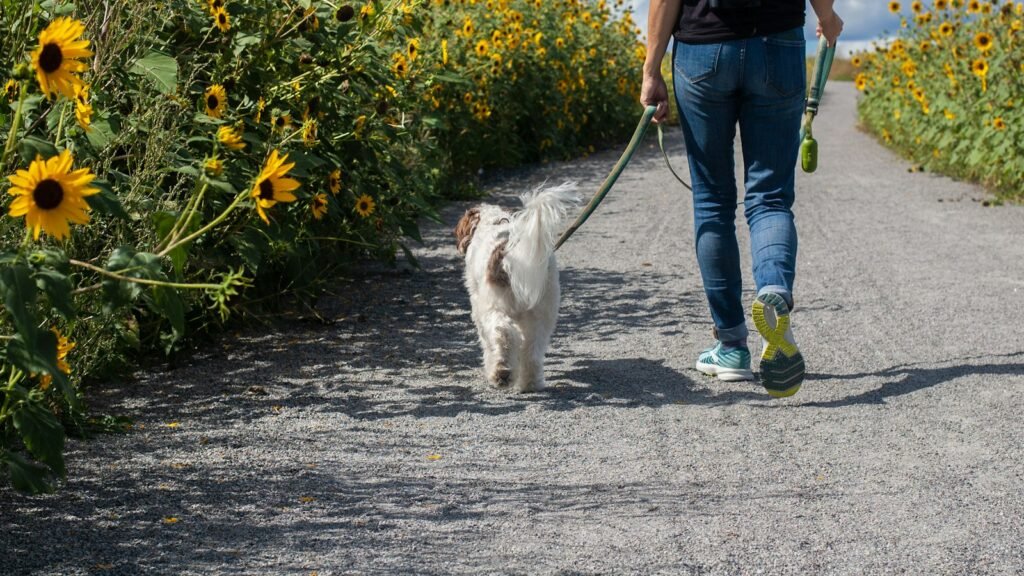
A structured daily routine is one of the most effective ways to lower stress, prevent behavioral issues, and strengthen the bond between you and your dog. Dogs rely on predictable schedules for feeding, exercise, and rest.
Whether you have a high-energy puppy or an aging senior, here is how to build a practical 7-day dog care schedule that fits your busy life.
✦ Need a Custom Schedule?
Generate a personalized care routine tailored to your dog’s age and energy level using our Free Dog Wellness Planner Tool.
Why Daily Routines Matter for Dogs
Predictability creates security for dogs. When dogs know when to expect food, walks, and quiet time, they exhibit significantly lower cortisol (stress) levels and fewer destructive behaviors like excessive barking or chewing.
It matters most for three groups — dogs newly arrived in a home, dogs who are anxious when alone, and dogs whose people work irregular hours. In each case the routine is doing the job that certainty would otherwise do.
One caveat worth stating plainly: a routine is a rhythm, not a stopwatch. The order of the day matters more than the exact minute. Dogs who are trained to expect dinner at precisely 6.00pm tend to become harder to live with, not easier, because any delay becomes a problem.
The 4 Pillars of a Great Dog Routine
- Consistent Meals: Feeding at the same times every day regulates digestion and house-training.
- Targeted Exercise: Combine physical exercise (walks, fetch) with mental stimulation (puzzle toys, sniffing games).
- Rest & Downtime: Adult dogs need 12–14 hours of sleep per day, while puppies need up to 18 hours.
- Grooming & Health Checks: Weekly ear checks, nail trims, and coat brushing prevent unexpected vet visits.
Sample Daily Routine for Adult Dogs
- 7:00 AM – Morning Walk & Potty Break: 20–30 minutes of walking and sniffing.
- 7:30 AM – Morning Meal & Fresh Water: Serve breakfast after the walk.
- 12:00 PM – Midday Relief & Mental Play: Short potty break and 10 minutes with a puzzle toy or Kong.
- 5:30 PM – Evening Exercise: Active play or a longer neighborhood walk.
- 6:15 PM – Dinner: Evening feeding session.
- 9:30 PM – Final Potty Break & Bedtime: Short outing before winding down for sleep.
The same day for a puppy
Puppies run on a much shorter cycle: eat, toilet, play, sleep, repeat. The two differences that matter are frequency and sleep. Expect a toilet trip every one to two hours while awake, and protect the naps — an overtired puppy looks like a badly behaved one.
- Toilet trips: after waking, after eating, after play, and before sleep. Age in months plus one gives the maximum hours they can hold it.
- Meals: three a day until around six months, then two.
- Sleep: up to 18 hours a day, taken in short blocks. If a puppy gets frantic in the late afternoon, the answer is usually a nap rather than another walk.
The full version is here: a realistic daily schedule for a new puppy.
The same day for a senior dog
Older dogs need the same structure with softer edges. The single biggest change is splitting exercise: one long walk becomes two shorter ones, and toilet breaks come back to every three or four hours.
Large breeds are considered senior from about seven years, small breeds from about ten — so this often starts earlier than owners expect. See the senior dog daily routine for what changes and when.
When your hours do not fit the template
Most people’s do not. Shift work, long commutes and irregular days are the norm rather than the exception, and a routine built for someone else’s day is worse than no routine at all.
Two principles carry most of the weight:
- Keep the order, flex the clock. Walk, then feed, then rest — in that sequence — works whether it starts at 6am or 11am. The sequence is what the dog learns.
- Anchor the day at both ends. A reliable first event and a reliable last event give the day a shape even when the middle moves around.
If your dog is alone for long stretches, that is the constraint worth solving first: how long can you leave a dog alone covers what the welfare guidance actually says, and what to do when your day runs longer.
Changing a routine without unsettling your dog
Whether it is a new job, a house move or the clocks changing, move in 15-minute steps every two or three days rather than all at once. A meal that shifts by an hour overnight tends to produce a week of early waking and begging; the same hour moved across a fortnight usually passes unnoticed.
Expect about two weeks for a new rhythm to settle, and longer for a dog who has recently changed homes.
Frequently Asked Questions
How long does it take for a dog to get used to a new routine?
Most dogs adapt to a new schedule within 1 to 2 weeks of consistent daily enforcement.
Want this as a plan built around your dog?
Answer a few questions about your dog’s age, energy and your schedule, and the free Dog Wellness Planner builds a 7-day routine you can print or adjust.