
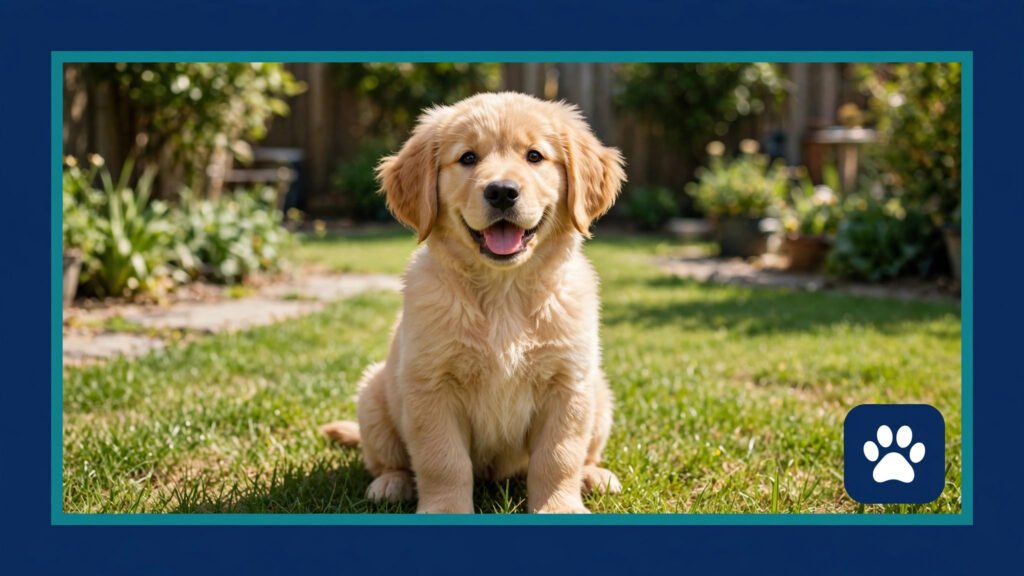
Nothing tests a new puppy owner’s patience like house training — but here’s the reassuring truth: most accidents aren’t a training problem. They’re a scheduling problem. A puppy potty training schedule simply matches potty breaks to your puppy’s age and bladder capacity, so you’re outside before nature calls instead of mopping up after it.
The short answer: A puppy potty training schedule matches potty breaks to your puppy’s age and bladder capacity. Rule of thumb: about one hour of hold per month of age — an upper limit, not a goal. Take your puppy out after waking, eating, drinking, and playing, plus before bed: every 30–60 minutes at 8 weeks, stretching to every 3–4 hours by 6 months.
In this guide you’ll get the bladder-control rule trainers and vets use, a complete age-by-age schedule table, a sample daily routine you can copy, the step-by-step method that makes it stick, and answers to the questions new owners ask most. If you’re in the very first days with your new puppy, pair this with our complete first-week guide for the bigger picture.
How long can a puppy hold it? The bladder-control rule
Everything in potty training flows from one fact: young puppies physically cannot hold their bladder for long. The widely used guideline — echoed by the AKC — is that a puppy can control their bladder for about as many hours as they are months old, up to roughly nine months to a year. So a 2-month-old puppy tops out around 2 hours, a 3-month-old around 3 hours, and so on.
Read that as a ceiling, not a target. Rover’s veterinary guidance stresses the same point: it’s always better to err on the side of an extra potty break, because consistently pushing past capacity teaches a puppy that soiling their space is acceptable — which sets training backward (rover.com).
Four things that change the math:
- Night is easier than day. Puppies usually hold it longer overnight because their metabolism slows and they’re still and unstimulated. That doesn’t mean skipping night breaks for a young puppy — just that the daytime schedule is the demanding one.
- Activity resets the clock. After eating, drinking, or a burst of play, the “months = hours” rule goes out the window. Excitement increases the urge and reduces control, so always go out right after these moments regardless of the schedule.
- Small breeds often need more time. Smaller puppies have smaller bladders and may need more frequent breaks — and more weeks — than the table suggests.
- Every puppy is an individual. Treat the numbers below as starting points and adjust based on what you observe. A detailed age-by-age breakdown is also covered well at vetexplainspets.com.
When the schedule isn’t the problem: if your puppy suddenly starts having frequent accidents after being reliable, strains to urinate, or seems to need to go far more often than the schedule suggests, that can signal a urinary tract infection or another medical issue. See your veterinarian rather than retraining harder.
What does a puppy potty training schedule look like by age?
Here’s the full schedule in one table. “Frequency” is how often to go out during waking hours; “max hold” is the longest stretch to ever plan for (including naps and crate time).
| Puppy’s age | Daytime frequency | Max hold | Overnight trips |
|---|---|---|---|
| 8–10 weeks | Every 30–60 minutes | 1–2 hours | 2 |
| 10–12 weeks | Every 60–90 minutes | 2–3 hours | 1–2 |
| 3 months | Every 2 hours | 3 hours | 1 |
| 4 months | Every 2–3 hours | 4 hours | 0–1 |
| 5–6 months | Every 3–4 hours | 5–6 hours | 0 |
| 6+ months | 3–5 breaks per day | 6–8 hours | 0 |
8–10 weeks: the frequent-flyer phase
Bladder control is minimal and accidents are completely normal. This stage is about building the habit — outside equals potty — not about perfection. Expect many trips, celebrate every success, and don’t be discouraged by daily accidents. If you work away from home, this is the age where a midday helper matters most; see how long you can leave a dog alone to plan coverage honestly.
10–12 weeks: things start clicking
Puppies begin to associate the outdoors with potty time and bladder control improves slightly. Consistency now pays off enormously — same door, same spot, same routine every single time.
3–4 months: the biggest improvement phase
Bladder muscles strengthen, puppies start giving clearer signals (circling, sniffing, heading for the door), and nighttime control improves sharply. Many owners relax the schedule too early here and trigger setbacks — hold the routine a little longer than you think you need to.
4–6 months: reliability begins
Accidents drop off steeply and signals become obvious. Excitement and distraction can still cause the occasional accident — a puppy who “knows better” at home may still forget at a friend’s house. That’s normal, not defiance.
6 months and up: mostly trained
Most puppies are reliably house trained by 6 months, though some small breeds and sensitive individuals take longer. From here it’s maintenance: a predictable routine and prompt responses to signals.
When should you always take your puppy out?
The schedule sets your baseline, but certain moments trigger a potty break no matter when the last one was. Memorize this list and you’ll prevent the large majority of accidents:
- Immediately after waking up — first thing in the morning and after every nap.
- After eating — usually within 5 to 30 minutes. A consistent feeding schedule makes potty timing predictable; our puppy feeding guide and free Dog Food Portion Calculator help you nail meal timing and amounts.
- After drinking a lot of water.
- After play sessions — excitement speeds everything up.
- Before going into the crate and immediately after coming out.
- After exciting events — guests arriving, a new toy, a car ride.
- Right before bedtime — the last trip of the night.
If you remember only one rule, make it this: wake, potty, play, potty, eat, potty, rest, repeat.
What does a sample daily potty training schedule look like?
Here’s a sample day for a 10-week-old puppy. Shift the times to fit your household, but keep the pattern — the rhythm matters more than the clock. For a fuller daily plan covering meals, naps, play, and training (not just potty breaks), see our realistic daily schedule for a new puppy.
- 6:30 am — Wake up, straight outside to the potty spot.
- 6:40 am — Breakfast (young puppies typically eat three meals a day).
- 6:55 am — Potty break, 5–15 minutes after eating.
- 7:00–7:20 am — Gentle play, a little training, cuddle time.
- 7:20 am — Potty break after play.
- 7:30 am — Crate or pen for a nap (potty right before).
- 8:30 am — Potty immediately on waking.
- Mid-morning — Repeat the cycle: short play, potty, nap. Potty breaks every 60–90 minutes while awake.
- 12:00 pm — Lunch, then a potty break 5–30 minutes later.
- Afternoon — More play–potty–nap cycles. Add a short walk if your vet has cleared it — potty before and after.
- 5:30 pm — Dinner, then a potty break.
- Evening — Calmer play and cuddles, with potty breaks every 60–90 minutes (more often if your puppy is extra energetic).
- 9:30–10:30 pm — Final potty break, then bedtime in the crate.
As your puppy ages, stretch the intervals according to the table above — the structure stays the same, the gaps just get longer. Want this personalized around your puppy’s age, size, and energy level? Our free Dog Wellness Planner quiz builds a daily routine in about 60 seconds.
How do you potty train a puppy step by step?
The schedule gets you outside at the right time. These seven steps make sure the trip actually teaches something.
1. Pick one potty spot and always use it
Dogs learn by association, and scent is a powerful cue. Taking your puppy to the same outdoor spot every time speeds up training more than almost anything else — the familiar smell tells them what to do.
2. Go out on schedule, not on suspicion
Don’t wait until your puppy “looks like” they need to go. Beginners are terrible at reading early signals, and by the time the circling and sniffing starts, you’re often too late. Trust the schedule; the signals will come later.
3. Reward within seconds — timing is everything
The instant your puppy finishes, praise warmly and offer a small treat. The reward must land within a few seconds of the act, or your puppy won’t connect it to pottying outside. Keep treats in a pocket by the door so you’re never caught empty-handed.
4. Add a cue word
As your puppy starts going, calmly say your chosen phrase — “go potty,” “do your business,” whatever you like — then reward. Over weeks, the phrase becomes a useful on-command cue for rainy days and travel.
5. Supervise or confine — there is no third option
An unsupervised puppy is a puppy rehearsing accidents. When your eyes aren’t on them, they should be in a crate, pen, or puppy-proofed room. Freedom around the house is earned gradually as reliability grows, room by room.
6. Use the crate as a training aid, never as punishment
Dogs naturally avoid soiling their sleeping area, which makes a properly sized crate (big enough to stand, turn, and lie down — no bigger) a powerful housetraining tool. The crate helps your puppy practice holding it between scheduled breaks. Never use it for punishment, or you’ll destroy the association that makes it work.
7. Handle accidents calmly and clean them completely
If you catch your puppy mid-accident, interrupt gently with a calm “oops,” scoop them up, and head outside — then reward if they finish there. Never punish after the fact: your puppy won’t connect your anger to something that happened minutes ago, and punishment teaches them to hide it from you instead. Clean every accident with an enzymatic cleaner (not ammonia-based products, which can smell like urine to a dog) so no scent marker draws them back to the same spot.
How long does it take to potty train a puppy?
Most puppies are reliably house trained somewhere between 4 and 6 months of age, with smaller breeds and sensitive individuals sometimes taking longer — up to a year for full reliability in some cases. The first two weeks are about habit; the following months are about bladder capacity catching up with the habit.
Setbacks are part of the process. A move, a schedule change, a new pet, or adolescence can all cause a temporary regression. Go back to the schedule for your puppy’s age (not their “trained” status), tighten supervision for a week or two, and progress usually resumes.
Call your vet if a previously reliable puppy suddenly regresses, strains to urinate, passes very small amounts very frequently, or shows blood in the urine — urinary tract infections are a common and treatable cause, and no amount of retraining fixes a medical problem.
How do you handle potty training at night?
Nighttime is simpler than owners fear, because puppies hold it longer while asleep. The plan:
- Last call right before bed. Make the final potty trip the last thing that happens — after evening play has wound down.
- Set an alarm for young puppies. Under about 4 months, plan 1–2 overnight trips. Set an alarm rather than waiting for crying — waking a puppy that’s already distressed and about to go teaches them that crying precedes accidents. Gradually push the alarm later as they mature.
- Keep the crate near your bed so you hear early stirring and whining.
- Make overnight trips boring. Leash on, straight to the spot, quiet praise, straight back to bed. No play, no excitement — you want your puppy to learn that nighttime is for sleeping, not socializing.
- Ask your vet about evening water. Many owners pick up the water bowl a couple of hours before bedtime to reduce overnight urgency. If your puppy has any health condition, is very young, or the weather is hot, check with your veterinarian first.
What are the most common potty training mistakes?
- Punishing accidents. It doesn’t teach holding — it teaches hiding. Your puppy learns to sneak off to another room, which looks like the problem got worse.
- Too much freedom too soon. A puppy who is perfect in the kitchen isn’t trained for the whole house. Expand access one room at a time as reliability proves out.
- An inconsistent schedule. Different wake times, different people with different rules, skipped breaks on busy days — inconsistency is the #1 cause of “he was doing so well and then regressed.”
- Skipping nighttime breaks. Expecting an 8-week-old puppy to hold it all night sets them up to soil the crate, which works against the crate’s training value.
- Cleaning with the wrong products. Regular household cleaners and ammonia-based products can leave scent markers (or smell like urine to a dog). Use an enzymatic cleaner made for pet accidents.
- Expecting too much too fast. Comparing your 10-week-old to someone’s 5-month-old is a recipe for frustration. Train the puppy in front of you, on the schedule for their age.
Frequently asked questions
How often should I take my 8-week-old puppy out to pee?
Every 30–60 minutes while awake, plus after every wake-up, meal, drink, and play session, and right before bed. Plan on 1–2 overnight trips as well. It sounds like a lot because it is — this is the most intensive phase, and it passes.
Should I use puppy pads or go straight to outdoor training?
Going straight outside is simpler, because pads teach a puppy that eliminating indoors is sometimes okay — a distinction that’s hard to unteach later. If pads are unavoidable (a high-rise apartment, for example), keep the pad in one consistent spot and transition to outdoor-only gradually rather than overnight.
How do I potty train my puppy when I work full time?
Match your coverage to the max-hold column in the table above: a young puppy needs a midday break from a family member, neighbor, friend, or dog walker. Two longer gaps are worse than one consistent midday break. Our guide to how long you can leave a dog alone helps you plan realistic coverage by age.
Why does my puppy pee right after coming back inside?
Usually one of two things: they got distracted outside and didn’t fully empty, or the trip was too short. Stay out a few minutes longer, keep the trip boring until business is done, and always use the same spot. If it’s a new behavior in a previously reliable puppy, check with your vet to rule out a urinary issue.
Is it normal for a 5-month-old puppy to still have accidents?
Occasional accidents at 5 months are normal — excitement, new environments, and big distractions can still overwhelm developing control. Stay consistent, keep cleaning with enzymatic cleaner, and don’t loosen supervision yet. A sudden cluster of accidents after weeks of reliability deserves a vet check.
When can my puppy sleep through the night without a potty break?
Many puppies manage it around 4 months; smaller breeds often need longer. Drop the overnight trip gradually — push the alarm 30 minutes later every few nights — rather than going cold turkey and risking a crate accident.
🐾 Free tools for the puppy phase
A good schedule is half the battle — the right routine is the other half. BlueTarg’s free tools are built for exactly this stage:
- Dog Wellness Planner quiz — a free personalized daily routine for your puppy in about 60 seconds.
- Dog Food Portion Calculator — consistent meals make potty timing predictable; get portions right by age and weight.
- Dog Exercise Needs Finder — age-appropriate activity so play sessions end before overtired accidents begin.
Want the Pro versions — saved puppy profiles, vet-ready health history, and printable plans? Pro Pet Pass is $7/month, free for the first 14 days.
Sources: Rover, “How Often Do Puppies Pee?” (rover.com/blog/how-long-puppies-hold-pee/); Vet Explains Pets, “Puppy Potty Training Schedule By Age” (vetexplainspets.com). This article is educational and doesn’t replace your veterinarian’s advice.