
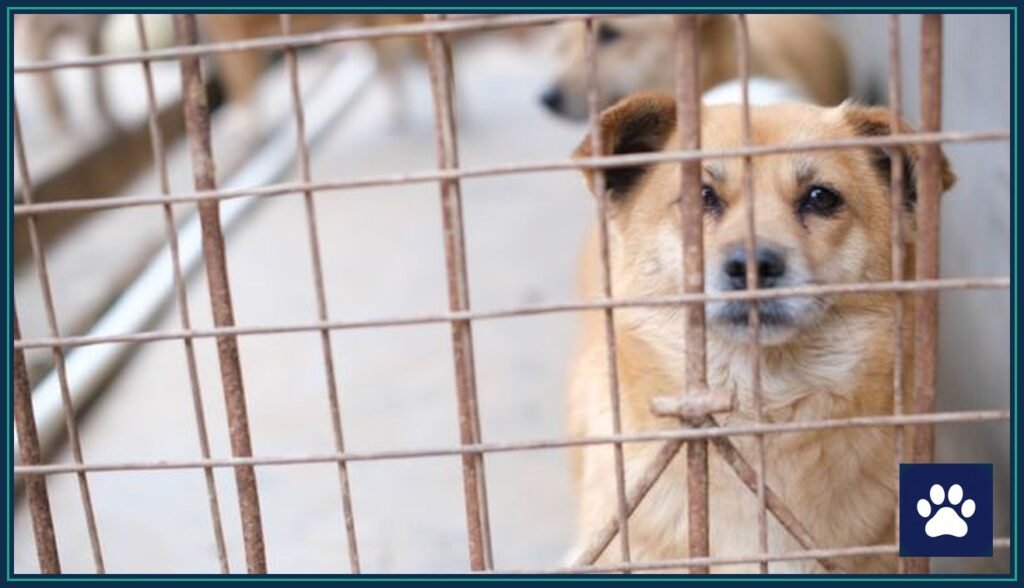
A real dog rescue keeps dogs fed, housed, and under veterinary care. On October 5, 2026, deputies seized about 30 dogs from a Washington “rescue” where they were allegedly starving. Here are the dog rescue red flags to check before you adopt or donate.
What happened at Pittie Project PNW?
On Monday, October 5, 2026, Whatcom County Sheriff’s Office deputies responded to a tip about a property on Russet Avenue south of Lynden, Washington, where roughly 30 dogs were housed by an organization called Pittie Project PNW. What they found, according to My Bellingham Now, was horrifying: dogs living in filth with no adequate food or water, many with open wounds, visible bones, and fur matted with feces.
Founder Ashley Georgia, 38, now faces 30 felony counts of first-degree animal cruelty, per court documents; an arrest warrant was issued. These are allegations, not proven in court. Volunteers had already removed 13 dogs on their own, and investigators say Georgia collected donated food and thousands of dollars while donated food bags sat unused. The seized dogs are with the Whatcom Humane Society for medical care, and are not currently available for adoption or foster.
Pittie Project PNW described itself as a nonprofit rehabilitating pit bulls and bulldogs. Adopters believed they were helping dogs — which is why dog rescue red flags matter: the word “rescue” on a website doesn’t guarantee the dogs are safe.
What is a legitimate dog rescue?
The key difference between a real rescue and a bad one isn’t passion — it’s accountability. Good rescues build records you can check: verify, visit, and ask for proof.
What are the red flags of a bad dog rescue?
Watch for these dog rescue red flags before you adopt, foster, or donate:
1. You can’t visit where the dogs live
A rescue that refuses facility visits — or has no physical address — is the biggest warning sign. Legitimate rescues welcome scheduled visits. If every meeting happens in a parking lot, ask why.
2. No verifiable nonprofit status
Real U.S. rescues are usually registered 501(c)(3) nonprofits. Look up their EIN on the IRS Tax Exempt Organization Search. If the “nonprofit” can’t provide one, nobody is overseeing how donation money is spent.
3. No vet records for the dogs
Every dog leaving a real rescue comes with vaccination records, spay/neuter status, and treatment history. A rescue that can’t show you a dog’s vet records isn’t providing care — or is hiding something.
4. Pressure tactics and cash-only payments
“Adopt today or the dog’s gone.” “Cash only, no receipts.” Legitimate rescues charge structured fees, accept traceable payments, and give you time to think.
5. Endless intake, no outcomes
Dozens of dogs but rarely an adoption posted? Intake without outcomes can mean hoarding — sometimes with sincere intentions. Ask how many dogs they placed last year.
6. Bad-mouthing every other rescue
Be wary of the rescue that claims every shelter “kills dogs” while only it can be trusted. Reputable rescues collaborate with shelters — they don’t rely on fear and isolation.
7. Donations in, accountability out
In the Washington case, donated food allegedly sat unused while dogs starved. A rescue should say plainly what your donation buys. Vague fundraising with no transparency is a classic dog rescue red flag.
How do you verify a dog rescue before adopting or donating?
Run this checklist — it takes an afternoon and protects both you and the dogs:
- Look up the nonprofit status. Search the rescue’s name and EIN on the IRS Tax Exempt Organization Search. No EIN, no accountability.
- Visit in person. Clean bedding, fresh water, adequate space, dogs that look fed and healthy — or that’s your answer.
- Ask for vet records for the specific dog — vaccinations, spay/neuter, deworming. Call the vet listed to confirm.
- Read reviews and ask for references. Check Google, Facebook, and local groups. Ask the rescue for two adopters you can contact.
- Check with the local humane society. Your county shelter knows which rescues are reputable partners.
- Start small with donations. Donate once, then watch for a thank-you and an outcome update. Groups like Best Friends Animal Society model the gold standard: published financials, transparent outcomes, open facilities.
The same judgment applies when you board your dog — see our guide to dog boarding red flags before leaving your pet anywhere overnight.
What should you do if you suspect a rescue is abusing animals?
Trust what you see, not what you’re told. In the Washington case, volunteers quietly removed 13 dogs before authorities arrived — and that likely saved lives. If a rescue’s dogs look underfed, wounded, or kept in filthy conditions: document (photos, dates, conditions, from outside the property if you can’t enter safely); report to county animal control or the sheriff’s non-emergency line — animal cruelty is a crime in every U.S. state, and you don’t need proof, just a good-faith report; contact the state charity regulator (usually the attorney general’s office) if donations seem misused; and don’t trespass to “rescue” the dogs yourself — that can undermine an investigation and put you at legal risk.
One report can start everything — the Whatcom County investigation began with a single tip.
Frequently asked questions
How do I check if a dog rescue is legitimate?
Look up its EIN on the IRS Tax Exempt Organization Search, visit the facility, ask for the dog’s vet records, and check with your local humane society. A legitimate rescue passes every check without hesitation.
Can I visit a rescue’s facility before adopting?
You should always be able to. Reputable rescues welcome scheduled visits or meet-and-greets. A rescue that permanently refuses visits is showing a clear dog rescue red flag.
What paperwork should a legitimate rescue provide?
At minimum: vaccination records, spay/neuter documentation, treatment history, an adoption contract, and the rescue’s contact info. If the only paperwork is a payment receipt, walk away.
Is it safe to donate to a rescue I found online?
Sometimes — but verify first. Confirm the 501(c)(3) status, look for published financials or outcome reports, and start with a small donation. Watch for a receipt and an update on the dogs your money helps.
I already adopted from a rescue that seems abusive — what now?
Get your dog to a vet immediately for a full health check. Then report the rescue to county animal control and, if you donated, to your state charity regulator. Your report protects the dogs still there.
Bringing home a new rescue dog?
The first weeks set the tone for your dog’s whole life. Build a healthy routine with the free Dog Wellness Planner, or take the free puppy plan quiz for a preview of personalized training. Pro Pet Pass is just $7/month.