
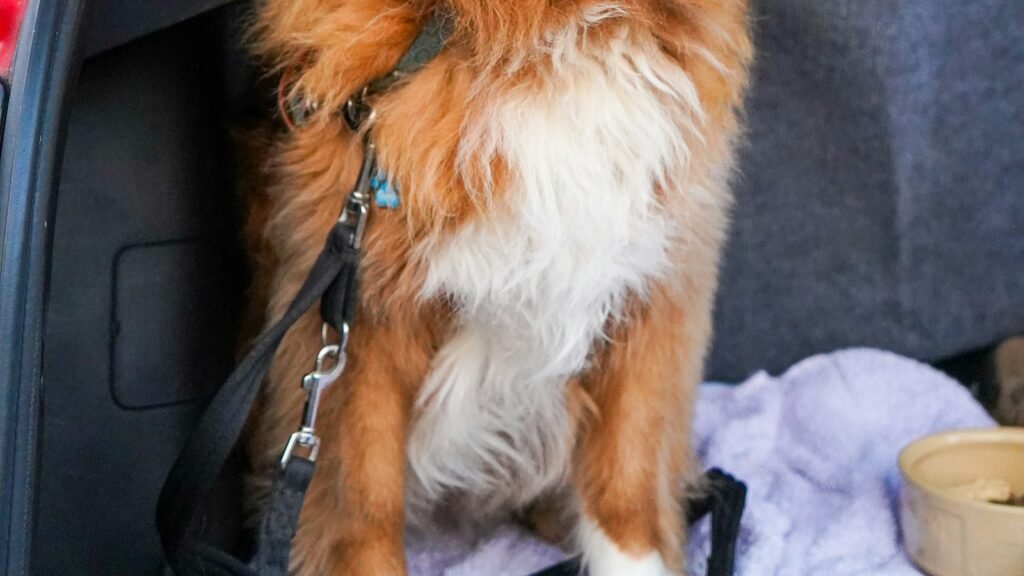
Whether it’s a quick trip to the park or a long road trip, car travel with your dog should be safe and calm — not stressful. Some dogs love the car; others get anxious or carsick. This guide covers how to keep your dog secure, comfortable, and happy on the road.
Quick answer: Secure your dog with a crash-tested harness or a well-ventilated crate — never let them roam free or ride in your lap. Build up to longer trips gradually, take breaks, bring water and familiar items, and never leave your dog alone in a parked car. For anxiety or motion sickness, short positive practice trips and a vet’s advice help a lot.
Why Car Safety Matters
An unrestrained dog is a real risk — to themselves and to you. In a sudden stop or crash, a loose dog can be injured, become a projectile, or escape and bolt into traffic. A dog in your lap or at your feet is also a serious distraction. Securing your dog properly is the single most important part of car travel.
What You’ll Need
- A crash-tested car safety harness or a secured travel crate
- A seatbelt tether or crate straps
- Water and a travel bowl
- A familiar blanket or toy
- Poop bags and basic supplies for longer trips
The Step-by-Step Plan
Step 1: Choose How to Secure Your Dog
Two safe options:
- Crash-tested harness + seatbelt tether — clips your dog’s harness to the seatbelt system, keeping them on the seat. Best for many dogs.
- Secured crate or carrier — great for dogs who feel safer in a den, especially smaller dogs. Must be anchored so it can’t slide or tip.
Avoid the front seat (airbags can injure dogs) — the back seat or cargo area with a barrier is safer.
Helpful tool: A crash-tested car harness keeps your dog secured to the seat and is far safer than letting them ride loose.
Step 2: Build Up Slowly for Nervous Dogs
If your dog is anxious or has only ridden to the vet (so the car = something scary), rebuild the association:
- Start by sitting in the parked car together with treats.
- Progress to the engine on, then a drive around the block.
- Take short trips to fun places (the park), not just the vet.
- Keep it calm and positive at every step.
Step 3: Prevent Motion Sickness
Carsickness is common, especially in puppies. To reduce it:
- Travel on an emptyish stomach (don’t feed a big meal right before).
- Keep the car cool and well-ventilated.
- Face your dog forward if possible.
- Take breaks on longer trips.
- Short, frequent practice trips help many dogs outgrow it.
If motion sickness is severe, ask your vet — there are safe medications that can help.
Step 4: Pack the Essentials
For anything longer than a short hop, bring water and a bowl, a familiar blanket or toy for comfort, poop bags, and any medications. For long trips, plan bathroom and stretch breaks every 2–3 hours.
Step 5: Never Leave Your Dog Alone in the Car
This deserves its own step because it’s so important: a parked car heats up to deadly temperatures within minutes in warm weather, and can get dangerously cold in winter. Never leave your dog alone in a parked car. If your dog can’t come with you where you’re going, leave them at home.
Common Mistakes
- Letting the dog ride loose or in your lap. Dangerous and distracting.
- Head fully out the window. Fun-looking but risks eye/ear injury and jumping out; a cracked window for air is safer.
- Only driving to the vet. Teaches your dog the car means something scary.
- Feeding a big meal right before. Increases carsickness.
- Leaving the dog in a parked car. Never safe in hot or cold weather.
Frequently Asked Questions
What’s the safest way for a dog to ride in a car? A crash-tested harness clipped to the seatbelt, or a securely anchored crate. Both keep your dog from roaming and protect them in a sudden stop.
How do I stop my dog getting carsick? Travel on a light stomach, keep the car cool and ventilated, take breaks, and build up with short positive trips. Ask your vet if it’s severe.
Can my dog ride in the front seat? It’s safer in the back — front airbags can injure a dog in a collision. Use the back seat or a barriered cargo area.
How often should I stop on a long road trip? Roughly every 2–3 hours for a bathroom break, water, and a short stretch. Never leave your dog in the parked car while you take breaks in hot or cold weather.
Keep Going
With the right setup, car trips become something your dog looks forward to.
→ Join the free BlueTarg newsletter for one practical dog tip a week.
BlueTarg guides are free and reader-supported. Some links are affiliate links; we only recommend products we’d use with our own dogs. This article is general information and not a substitute for professional veterinary advice.