
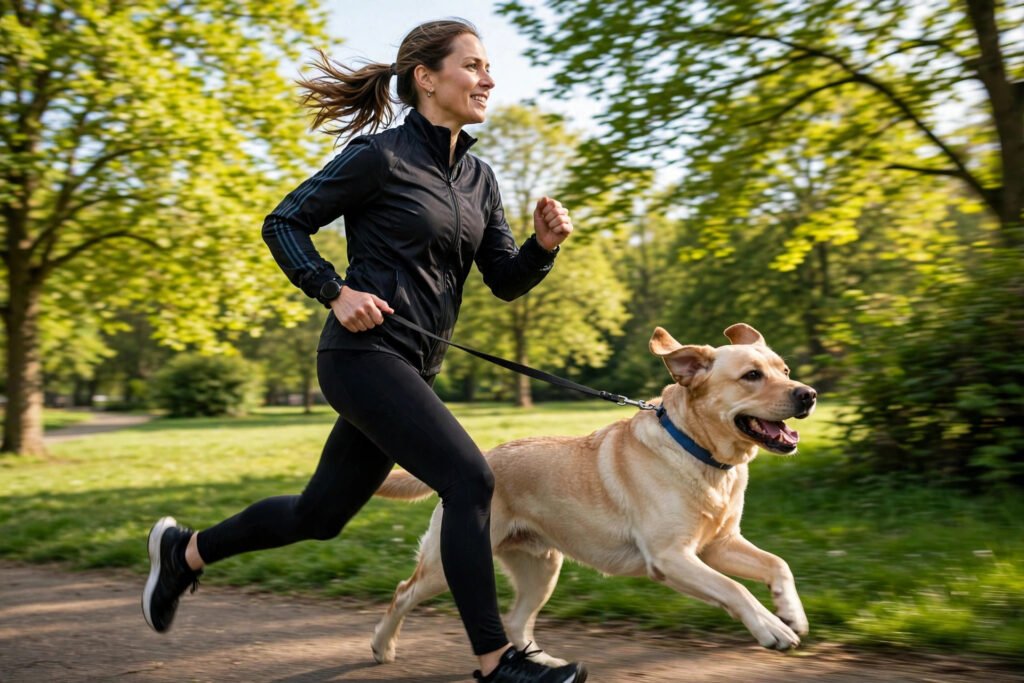
Most adult dogs need between 30 minutes and 2 hours of activity per day — and the right number for your dog comes down to energy level, age, and health. A Border Collie and a Bulldog are not playing the same sport. Puppies need short, frequent sessions (the 5-minute rule below), and seniors do best with gentler, more frequent movement. Use our free dog exercise calculator for a personalized target, and use this guide to understand the why behind it.
Exercise needs by energy level
The single biggest factor is your dog’s natural energy level, which is mostly set by breed type. These are general daily guidelines combining walks, active play, and mental enrichment — not one single marathon session.
| Energy level | Typical daily range | Example breeds |
|---|---|---|
| High | 90–120 minutes | Border Collie, Australian Shepherd, Belgian Malinois |
| High-moderate | 75–105 minutes | Labrador Retriever, Golden Retriever |
| Moderate | 60–90 minutes | Beagle, Corgi, many mixed breeds |
| Low | 30–45 minutes | Bulldog, Pug, Shih Tzu |
Mixed breeds are the wild card: go by what you actually see. A calm couch-loving mix lands in the low range; a mix that never stops moving probably needs the moderate or high range regardless of what the shelter paperwork guessed.
Puppies: the 5-minute rule
Puppies are not small adults. Their joints, growth plates, and stamina are still developing, so long forced exercise can do real harm. The widely used guideline among trainers and vets is simple: about 5 minutes of structured exercise per month of age, twice a day.
In practice: a 3-month-old puppy gets two 15-minute sessions; a 6-month-old gets two 30-minute sessions. These sessions can mix gentle walking, free sniffing, and short play bursts — but skip long jogs, repetitive fetch marathons, and high jumping until your vet gives the all-clear, usually after growth plates close. Add short training games and sniffing activities for mental tiredness, which counts double at this age.
Senior dogs need less, gentler movement
Around age 7 (earlier for giant breeds), most dogs start slowing down. A reasonable adjustment is about 25% less total activity than their adult amount, shifted toward low-impact movement: shorter walks, more frequent outings, soft surfaces, and plenty of sniffing time, which is genuinely tiring for an older nose. Swimming is excellent for arthritic dogs if your vet approves. Watch for lagging, stiffness after rest, or reluctance on stairs — those are signals to shorten sessions and talk to your vet, not to push through.
Mental exercise counts too
A tired brain makes a calm dog. Ten to fifteen minutes of sniffing games (scatter treats in grass), puzzle feeders, or training practice can wear a dog out as effectively as a much longer walk — and it’s the best substitute on days when weather, injury, or a busy schedule cuts physical exercise short. Aim to include 10–20 minutes of mental enrichment in the daily total, especially for smart, high-energy breeds that get destructive when only their legs are tired.
Signs of too little or too much exercise
Too little: restlessness in the evening, destructive chewing, excessive barking, hyper-greeting behavior, and gradual weight gain. These are often misread as “bad behavior” when the dog is simply under-exercised.
Too much: lagging behind on walks, limping or stiffness after rest, panting that takes unusually long to settle, and reluctance to head out the door. Puppies and seniors show these signs first. If you see them regularly, cut session length by a third and reassess over a week.
Heat caution: exercise during the cooler parts of the day, bring water, and learn the early signs of overheating — heavy drooling, glazed eyes, and stumbling. Flat-faced breeds (Bulldogs, Pugs, Shih Tzus) overheat faster and need shorter sessions in warm weather.
Frequently asked questions
How much exercise does a puppy need per day?
Use the 5-minute rule: about 5 minutes of structured exercise per month of age, twice a day. A 4-month-old puppy gets roughly two 20-minute sessions. Add short training and sniffing games for mental stimulation, and avoid long forced runs or repetitive jumping while joints are still developing.
Is a 30-minute walk enough for my dog?
It depends on your dog’s energy level. Thirty minutes plus some play is often fine for lower-energy breeds like Bulldogs, Pugs, or Shih Tzus. Moderate and high-energy breeds usually need 60 to 120 minutes of combined walking, play, and mental enrichment each day.
How much exercise does a senior dog need?
Senior dogs (around 7 years and older) still need daily movement, but about 25% less than their adult amount, and it should be low-impact. Shorter, more frequent walks on soft surfaces plus gentle sniffing games keep joints mobile without overdoing it. Check with your vet if your dog has arthritis or heart issues.
Can you over-exercise a dog?
Yes. Signs of over-exercise include lagging behind on walks, limping or stiffness afterward, heavy panting that takes a long time to settle, and reluctance to go out. Puppies and senior dogs are most at risk. If you notice these signs regularly, shorten sessions and talk to your vet.
Does mental stimulation count as exercise?
Yes, and it matters more than most owners realize. Ten to fifteen minutes of sniffing games, puzzle feeders, or training practice can tire a dog out as effectively as a much longer walk. Mental work is especially valuable for puppies, seniors, and dogs on restricted activity.
Get your dog’s exact number
Answer four quick questions and get a personalized daily exercise target with a sample walk, play, and enrichment split.
Try the free exercise calculator
Want to track walks, weight, and routines over time? Pro Pet Pass saves your dog’s history across devices.
This guide is for general educational purposes and is not veterinary advice. If your dog has a health condition, shows signs of pain, limping, or unusual fatigue, consult your veterinarian before changing their exercise routine.