
Search Results for: dog food

Salmonella in Dog Food: The Bowl-Side Risk Most Owners Never Think About
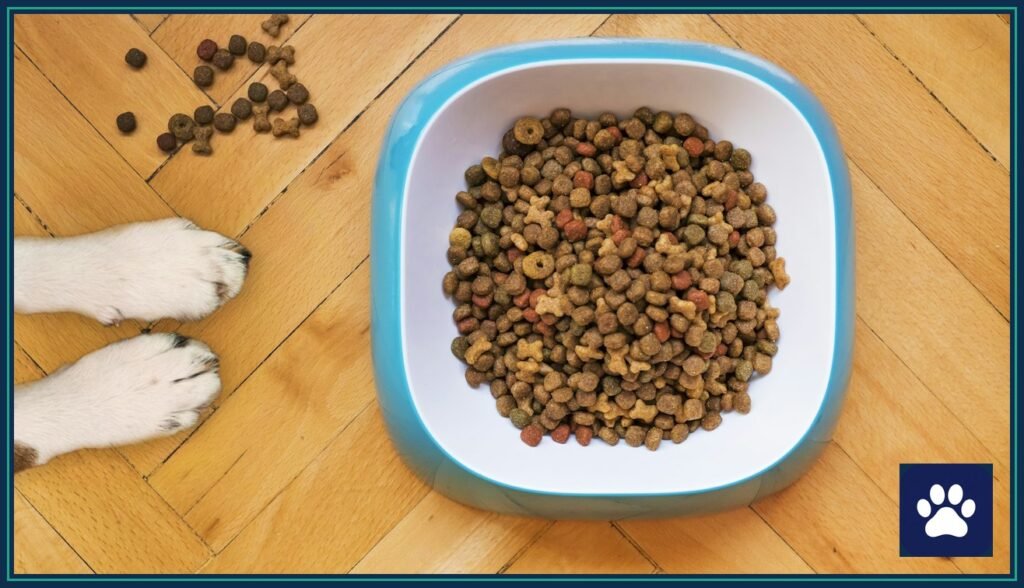
Overhead view of a dog food bowl filled with kibble on a wooden floor, with a dog's paws nearby

The short answer: Yes — Salmonella can contaminate dog food, especially raw diets. Dogs may vomit or get diarrhea, or show no signs while shedding bacteria in their stool. Treat dog food like raw meat: wash your hands and bowls, keep it away from human food, and check FDA recalls. Call your vet if your

Salmonella in Dog Food: The Bowl-Side Risk Most Owners Never Think About Read More »

Dog Food Portion Calculator

Most adult dogs need roughly 1 to 5½ cups of a typical dry food per day, depending on weight — about 350 to 1,960 calories. Puppies need more calories per pound of body weight, while many seniors do well on a little less. Use the calculator below for a personalized estimate, then fine-tune every few

Dog Food Portion Calculator Read More »

Free Dog Help Near You: Vet, Food & Shelter Resources

Free BlueTarg Community Tool Find pet help near you—without the panic. Choose what your pet needs and get a focused path to nearby shelters, affordable care, pet-food support, temporary housing, lost-pet resources and more. ✓ Free✓ No account required✓ Location stays in your browser✓ Trusted starting points ⚠️ Is an animal in immediate danger? Contact

Free Dog Help Near You: Vet, Food & Shelter Resources Read More »

Why Is My Dog Jerking Suddenly? A New Study Points to Low Blood Sugar — Not Just Seizures

Sudden, shock-like muscle jerks in a dog — called myoclonus — can signal low blood sugar, not just epilepsy, a new study of 10 dogs found. Nine had a pancreatic tumor called insulinoma. If your dog jerks suddenly, especially with weakness or collapse, call your vet promptly and film the episode if safe. Dog muscle

Why Is My Dog Jerking Suddenly? A New Study Points to Low Blood Sugar — Not Just Seizures Read More »

Is Your Dog’s Medicine Recalled? What the 4,000-Product Recall Means for You

Yes — check your dog’s medicine. Wedgewood Pharmacy recalled nearly 4,000 compounded veterinary medication listings shipped between February 18 and October 6, 2026, because lab testing data may have been unreliable, leaving some products weaker or stronger than labelled. If your dog takes a compounded medicine, check the recall list and call your vet before

Is Your Dog’s Medicine Recalled? What the 4,000-Product Recall Means for You Read More »

Thousands of Toxic Sea Hares Just Washed Up — and They Can Poison Your Dog

Are sea hares dangerous to dogs? Yes — they can be. Sea hares are sea slugs that store toxins from the algae they eat, using them as a chemical defence against predators. When a dog licks, mouths, or swallows a beached sea hare, the result can be severe poisoning. Poison experts describe contact as potentially

Thousands of Toxic Sea Hares Just Washed Up — and They Can Poison Your Dog Read More »

Why Does My Dog Bark at Everything? 9 Causes and What Actually Helps

The short answer: Dogs bark at “everything” because something about those moments reliably pays off for them — usually alarm barking at movement or noise, attention-seeking, boredom, or anxiety. Barking always serves a purpose for the dog, so the fix is to find the trigger, manage the environment, reward quiet behavior, train a “quiet” cue,

Why Does My Dog Bark at Everything? 9 Causes and What Actually Helps Read More »

Best Age to Spay or Neuter a Dog: Vet-Backed Pros and Cons

Smiling golden retriever and dachshund sitting side by side — illustrating spay and neuter timing guidance for large and small dog breeds

The short answer: Most small dogs (under 45 lbs) are best spayed or neutered around 6 months, before a female’s first heat. Most large breeds should wait until growth plates close — roughly 9–15 months, sometimes 24 months for giants. Breed-specific research shows one-size-fits-all advice no longer works, so confirm the timing with your own

Best Age to Spay or Neuter a Dog: Vet-Backed Pros and Cons Read More »