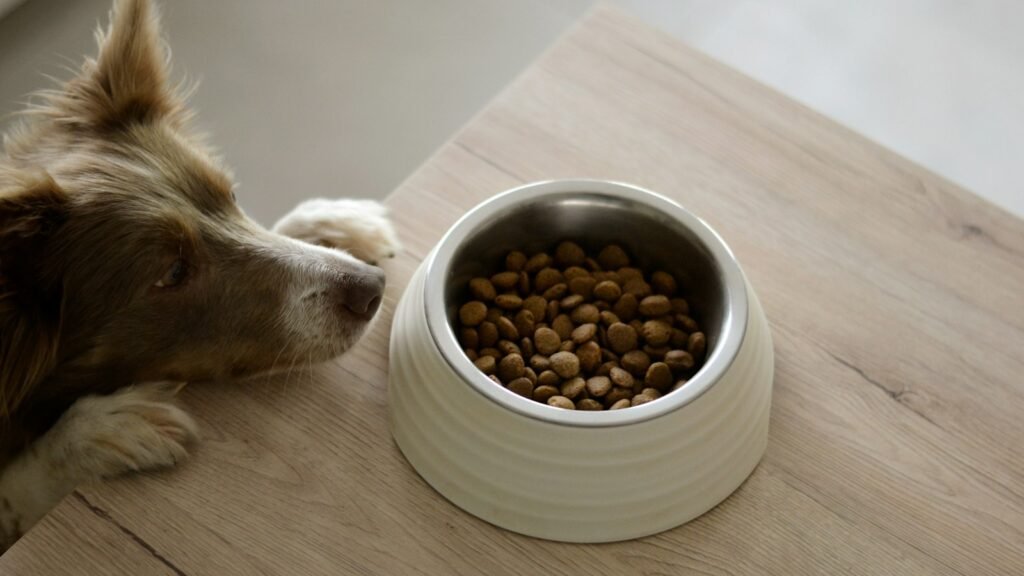
Most adult dogs do best on two measured meals a day, about 8 to 12 hours apart. Puppies need three or four smaller meals, tapering to two by around 6 to 12 months. Treats should stay at roughly 10% of daily calories, and any change of food should happen gradually over about a week.
This guide covers timing and frequency: how many meals, when, and what to do about treats and switching foods. For the amount itself, use our daily portion guide or the free Dog Food Portion Calculator.
How many meals a day, by age
- Puppies up to about 4 months: three to four small meals. Little stomachs and fast growth need frequent fuel.
- Puppies 4 to 12 months: usually three meals, dropping to two. Small breeds mature sooner; large and giant breeds keep growing longer, so ask your vet when to switch.
- Adult dogs: two meals, morning and evening, suit most dogs. Some do fine on one, but two keeps hunger steadier and makes it easier to spot a dog who has gone off their food.
- Seniors: often two meals, sometimes smaller and more frequent if appetite or digestion changes.
For a detailed puppy schedule, see our puppy feeding guide.
Why measured meals beat free-feeding
Leaving a full bowl out all day is convenient, and it’s one of the easiest ways for a dog to gain weight without anyone noticing. Measured meals let you see exactly how much your dog eats, and a skipped meal becomes an early warning sign instead of something you never catch. Use a measuring cup or, better, a kitchen scale. A “scoop” can vary a lot from one day to the next.
When to feed around walks and play
Many vets suggest avoiding hard exercise for an hour or so before and after a big meal, especially for large, deep-chested breeds, which are more prone to bloat (gastric dilatation-volvulus). A calm sniff walk is fine. A game of fetch straight after dinner isn’t worth the risk.
Treats: the 10% rule
Treats, chews and table scraps count toward the day’s calories. A common guideline, used in the WSAVA nutrition toolkit, is to keep them to about 10% of the daily total. If you’re training a lot, use pea-sized pieces, or set aside part of the day’s kibble as rewards.
Switching foods without an upset stomach
Change food gradually over about 7 days. A simple pattern:
- Days 1–2: about a quarter new food, three quarters old.
- Days 3–4: half and half.
- Days 5–6: three quarters new.
- Day 7: all new.
If stools turn loose, slow down and stay at the previous step for a few more days.
Foods that shouldn’t go in the bowl
Chocolate, grapes and raisins, onions and garlic, xylitol (found in some sugar-free gum, baked goods and peanut butters), macadamia nuts, alcohol and caffeine are all on the ASPCA’s list of foods to keep away from dogs. Cooked bones can splinter. If your dog eats something on that list, call your vet or the ASPCA Animal Poison Control Center at (888) 426-4435, and use our Dog Toxin Checker while you wait.
When to call your vet
Call your vet if your dog skips more than a meal or two, suddenly gets much hungrier or thirstier, loses or gains weight without a change in food, or vomits after meals. Ask before changing diet for puppies, pregnant or nursing dogs, seniors, or any dog with a medical condition.
Frequently asked questions
Is it OK to feed my dog once a day? Some healthy adult dogs manage on one meal, but two is the more common recommendation. Puppies should never be on one meal a day.
What time should I feed my dog? Whatever fits your routine, as long as it’s consistent. Morning and early evening works for most households.
How many treats are too many? Keep treats and extras to about 10% of daily calories.
My dog acts starving all the time. Should I feed more? Not necessarily. Check body condition first with our guide to signs your dog is overweight, and ask your vet if hunger has changed suddenly.
Sources: WSAVA Global Nutrition Guidelines; ASPCA, “People Foods to Avoid Feeding Your Pets”; AKC, “How Much Should I Feed My Dog?”. General information, not a substitute for advice from your vet.